

 English


Srikar Masala Blog
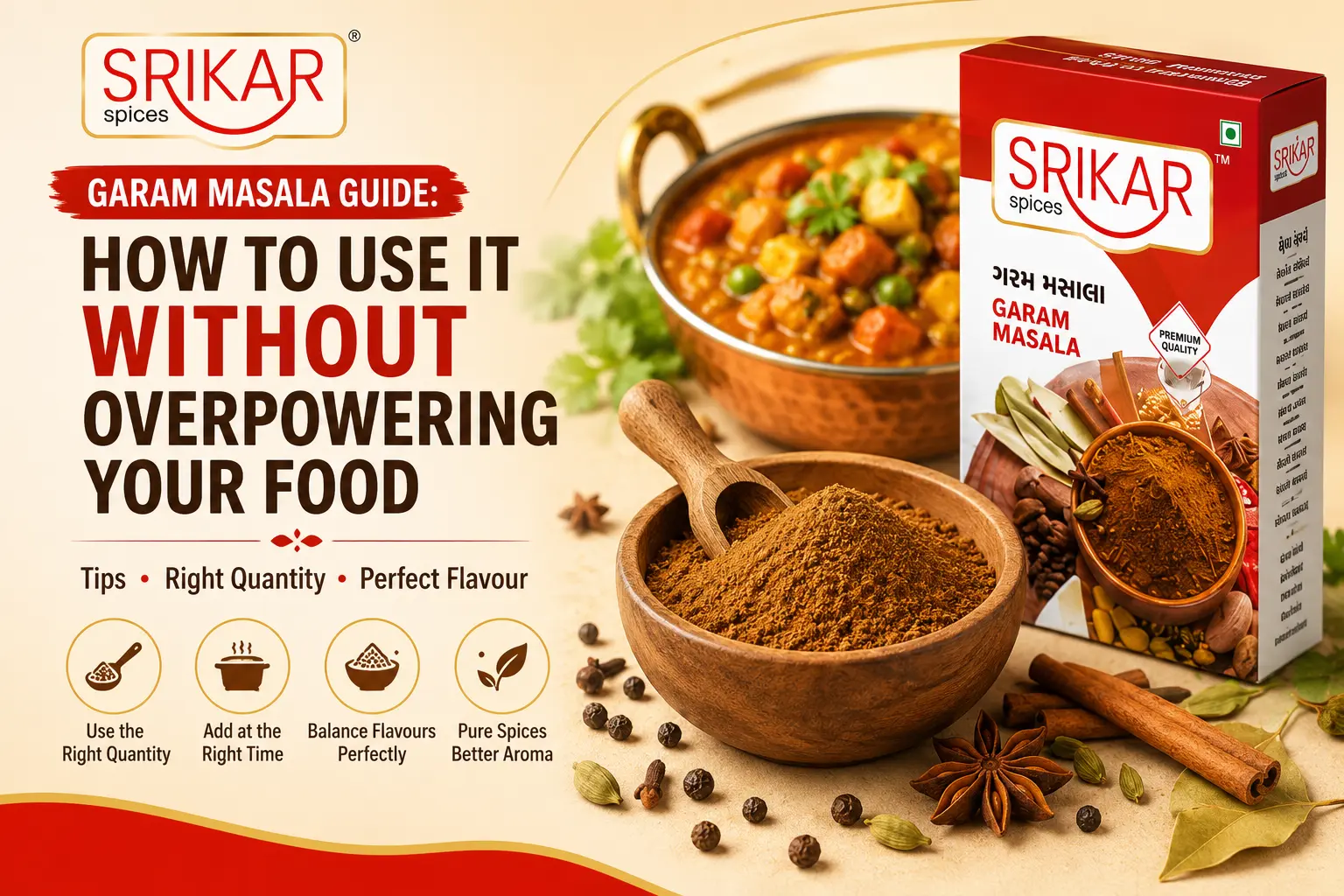
Garam Masala Guide: How to Use It Without Overpowering Your Food
Learn when to add garam masala, how much to use and which dishes benefit most. Get simple tips for richer aroma without overpowering your food.
Garam masala is powerful because it is concentrated
Garam masala is one of the best-known Indian spice blends, but it is also one of the most frequently overused. Unlike chilli powder or turmeric, which often form part of the base seasoning, garam masala is usually added in smaller quantities to create warmth, depth and a finished aroma.
The exact blend varies by region and brand, but it commonly brings together aromatic spices such as cumin, coriander, black pepper, cinnamon, cloves, cardamom and other warming ingredients. Because several strong spices are combined in one blend, a little goes a long way.
When should garam masala be added?
For most home-style dishes, add garam masala toward the end of cooking. This protects the aroma and prevents the spices from becoming too harsh. In a paneer gravy, for example, cook the onion-tomato base and main spices first, then add garam masala in the final few minutes. In pulao or biryani-style rice, it may be added earlier in a smaller quantity so the aroma spreads through the grains.
How much garam masala should you use?
There is no single universal quantity because the strength of each blend and the size of the recipe differ. As a practical rule, start small. For a family-sized vegetable or paneer dish, half to one teaspoon may be enough. Taste, then adjust. It is much easier to add a little more than to fix a dish that has become heavily spiced.
Best dishes for garam masala
Garam masala works especially well in rich gravies, paneer dishes, mixed vegetables, chole, rajma, pulao, biryani-style rice, dal tadka and certain stuffed vegetables. It can also lift a simple tomato-onion gravy when you want more depth without adding many separate whole spices.
When you may not need it
Not every Indian dish requires garam masala. Light Gujarati dals, kadhi, simple potato shaak, lemony snacks or delicate coconut-based dishes may taste better without it. Using the same masala in every recipe can make different dishes start tasting similar. Let the main ingredient and regional style decide whether garam masala belongs in the recipe.
Blooming versus finishing
Some cooks briefly bloom a pinch of garam masala in ghee, while others sprinkle it directly into the cooked gravy. Both methods can work, but high heat for too long can dull aromatic spices. If you bloom it, keep the time short. If you finish with it, stir well and allow the dish to rest for a minute before serving.
Pair it with the right base spices
A balanced dish usually starts with core spices such as turmeric, chilli and coriander-cumin powder, then uses garam masala for the final layer. This creates more dimensional flavour than using garam masala as the only seasoning. In tomato-based gravies, acidity, salt, fat and spice should all remain in balance.
Storage makes a noticeable difference
Because garam masala depends heavily on aroma, protect it from moisture and heat. Keep it in an airtight container, use a dry spoon and store it away from the stove. If the aroma becomes faint over time, the blend may still add colour but will not deliver the same fragrance.
A simple way to improve everyday cooking
The best garam masala does not announce itself as a separate flavour; it makes the whole dish feel more complete. Start with a small amount, add it at the right stage and let the ingredients remain recognisable. Srikar Garam Masala can be used as a convenient all-in-one finishing blend for many Indian home recipes, especially when you want consistent flavour without measuring several individual aromatic spices.