

 English


Srikar Masala Blog
Pav Bhaji Masala Guide: How to Get Street-Style Flavour at Home
Make better pav bhaji at home with the right masala, vegetables, butter and cooking technique. Simple tips for rich colour, aroma and street-style taste.
Why restaurant and street-style pav bhaji tastes different
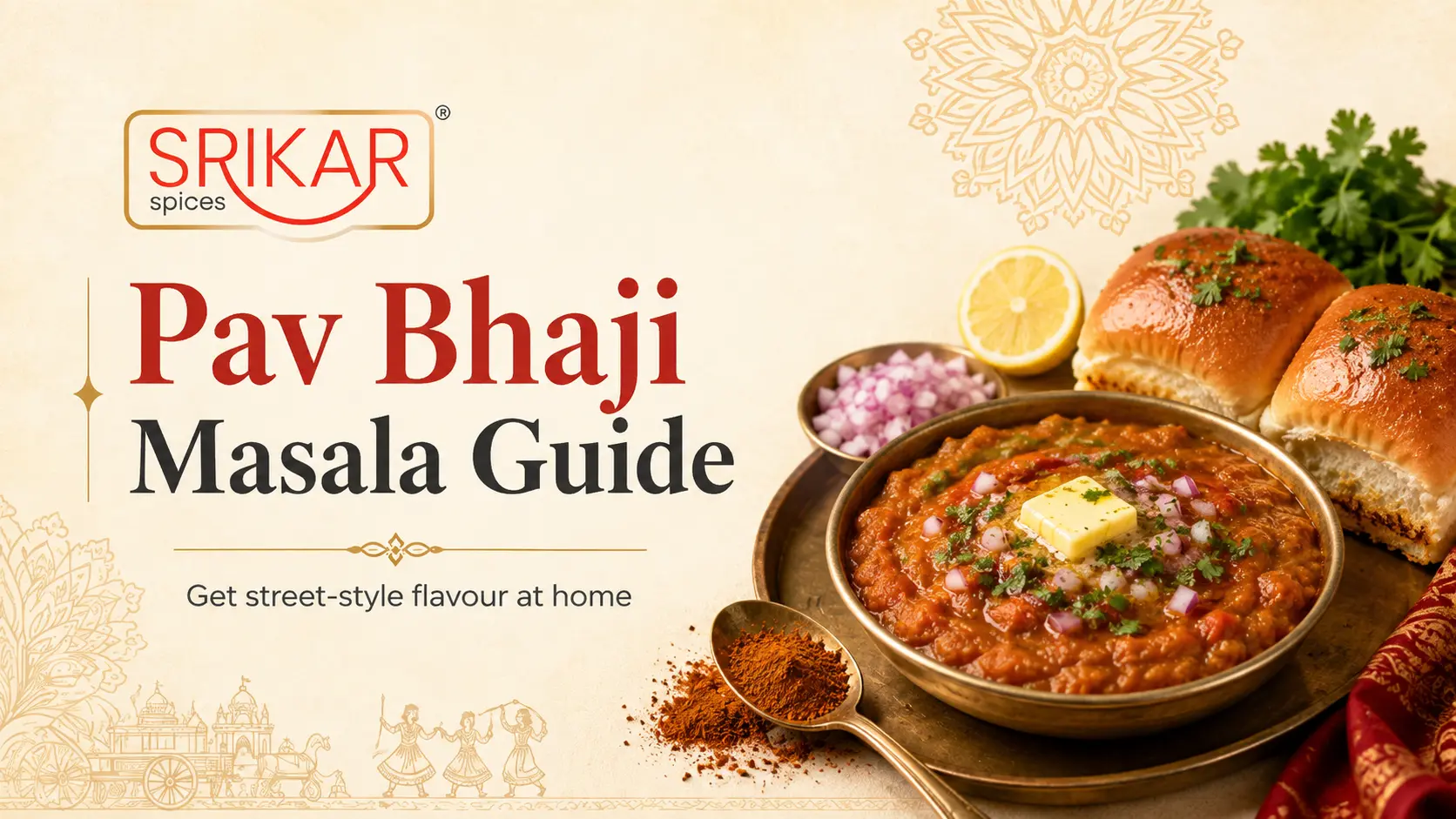
Pav bhaji looks simple: vegetables are boiled, mashed and cooked with tomatoes, butter and spices. Yet the best versions have a deep colour, roasted aroma and smooth, almost creamy texture. The difference usually comes from three things - the vegetable balance, the way the masala is cooked and the final buttery finish.
Choose the right vegetable base
Potato gives body, peas add sweetness, cauliflower brings volume and capsicum adds a recognisable street-style note. Some cooks also add carrots or beetroot, but too much of any one vegetable can change the classic flavour. Boil until soft, then mash well so the bhaji becomes cohesive rather than chunky.
Build flavour before adding the vegetables
Heat butter with a little oil, then cook onions until soft. Add tomatoes and cook them down thoroughly. This step is important because raw tomato acidity can make the bhaji taste sharp. Once the base looks glossy and begins to release fat, add pav bhaji masala and chilli according to your preferred heat level.
Why a dedicated pav bhaji masala helps
Pav bhaji needs more than generic garam masala. A dedicated blend is designed to match the buttery vegetable base and create the familiar chaat-like, tangy and aromatic profile. Using a consistent pav bhaji masala also makes it easier to reproduce the same taste when you cook for family or guests.
Add water gradually
Street-style bhaji is moist but not watery. Add hot water in small amounts while mashing and simmering. This lets the flavours blend without diluting the masala. Continue cooking on medium heat so the mixture thickens naturally.
The tawa-style finishing trick
For a deeper roasted flavour, spread the bhaji across a wide pan or tawa for a few minutes, then gather it back together. The increased surface contact helps caramelise some of the tomato and spice mixture. Do not let it burn; the goal is a richer aroma, not a smoky aftertaste.
Butter, lemon and coriander should come at the right time
Add a final knob of butter after the bhaji is cooked, not only at the beginning. Finish with fresh coriander and a squeeze of lemon according to taste. Lemon adds brightness, but too much can hide the masala, so serve extra wedges on the side rather than making the entire batch too sour.
Do not forget the pav
Slice pav and toast it on the same pan with butter, a little pav bhaji masala and coriander. The bread absorbs the seasoned butter and becomes part of the dish rather than just an accompaniment. Serve immediately while the outside is lightly crisp and the inside remains soft.
Other ways to use pav bhaji masala
A good pav bhaji masala is useful beyond the classic dish. Try it in masala pav, tawa pulao, spiced potato fillings, vegetable sandwiches or quick leftover-rice stir-fries. Because the blend is already complex, start with a small amount and adjust after tasting.
Bring the street-food experience into your kitchen
The easiest way to improve homemade pav bhaji is to focus on technique rather than adding more spice. Cook the tomato base properly, use a balanced pav bhaji masala, mash patiently and finish with butter and lemon. Srikar Pav Bhaji Masala is made for this style of cooking and can help create a more consistent flavour every time you prepare pav bhaji at home.